Rocket Lab’s shares aren’t exactly cheap. They are up more than 50% this year, leaving the company roughly on par with SpaceX on a price-to-sales basis at SpaceX’s targeted valuation. But it’s a lot easier for Rocket Lab to grow into its lofty expectations from a smaller base than it would be for SpaceX to grow fast enough to justify its valuation.
The case for many other listed space companies isn’t as clear-cut.
A few of them, like lunar-exploration specialist
Intuitive Machines, are serving a market that may or may not boom. Others, like communications-satellite operators including
AST Spacemobile,
Viasat and
Iridium, have more tangible growth prospects but also are in an increasingly crowded field.
Their futures are tied to rising demand for services including
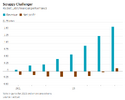
mobile-phone connections from space and, in Iridium’s case, using satellites to connect with internet-of-things devices on Earth. Satellite operators brought in $24 billion of revenue last year, New Street Research estimates. That figure is certain to rise in the years ahead, even if it doesn’t reach the $1.6 trillion potential market that SpaceX included in its recent IPO filing.
But there are also questions about smaller players’ ability to capture a huge piece of the revenue pie. SpaceX is already dominant with its Starlink internet service, which New Street estimates accounted for half of the industry’s revenue last year.
And Amazon.com is shaping up to be another well-funded competitor. It is launching satellites and plans to provide internet connections from space through its Amazon Leo subsidiary.
That may not be all bad news for smaller incumbents like AST, Viasat and Iridium. Even if they don’t end up building thriving businesses of their own, they own valuable spectrum—the right to transmit data and voice calls over certain frequencies.
That could make them acquisition targets, providing investors with an out if they can’t compete. Amazon agreed in April to
acquire satellite operator Globalstar, citing its satellite network and spectrum assets.
SpaceX is synonymous with space for many investors. But it doesn’t have the cosmos to itself.





 anda que .....
  ), la uso de forma exclusiva para la gestión de la liquidez (con la finalidad de volver a comprar RV), por tanto me muevo en tramos muy muy cortos, lo que implica que no hay riesgo de interés (por subidas/bajadas) ni tampoco riesgo de crédito (que no te pague el emisor).